
How Long Will a Power Station Run a Furnace?
Runtime math for running a furnace from a power station: why gas furnaces work but electric ones can't, the surge gotcha, and how to size by blower type.
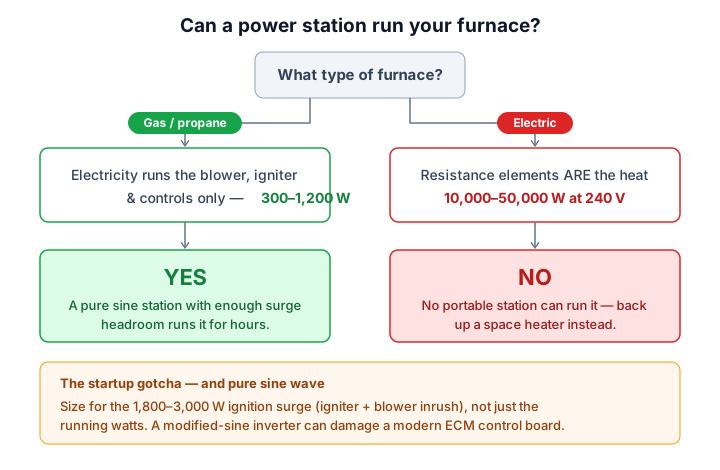
The short answer: it depends entirely on whether your furnace is gas or electric. A gas (or propane) furnace only uses electricity for its blower, igniter, and controls — typically 300–1,200W — so a 1,000Wh power station can keep it running for roughly a night (with cycling). An electric furnace heats with resistance elements that draw 10,000–50,000W at 240V — no portable power station can run one, period. This guide gives you the actual math for the gas case and explains why the electric case is a non-starter.
Important — heat is a safety issue in winter. This article covers the electrical engineering of running a furnace from a battery. A hardwired furnace must be connected through a proper transfer switch or inlet installed by a licensed electrician — never by back-feeding an outlet. A battery-powered gas furnace runs its normal combustion and venting, so there’s no extra carbon-monoxide risk beyond normal operation — but never improvise wiring, and in a hard freeze always keep a backup heat source and a plan for vulnerable household members.
First: gas furnace or electric furnace? This is the whole ballgame
The two could not be more different for backup power.
| Type | What needs electricity | Electrical draw | Can a power station run it? |
|---|---|---|---|
| Gas / propane furnace | Blower motor, igniter, inducer motor, control board (the gas does the heating) | 300–1,200W running | Yes — for hours |
| Electric furnace | Resistance heating elements (electricity is the heat) | 10,000–50,000W at 240V (most homes 15–30kW) | No — not even close |
Figures are typical ranges from HVAC documentation and manufacturer specs. An electric furnace draws roughly 10–50× more electricity than a gas furnace. Even a 6,000W split-phase unit like the Anker SOLIX F3800 can’t run a 15,000W+ electric furnace — so if your heat is electric, a power station is for keeping a space heater or other essentials going, not the furnace itself. Everything below is about gas/propane furnaces.
What a gas furnace actually pulls
A gas furnace’s electrical load is the sum of a few parts, and the blower motor type dominates runtime:
| Component | Running watts | Notes |
|---|---|---|
| PSC blower (older furnaces) | 500–900W | Startup surge 3–6× → spikes to 1,800W+ |
| ECM blower (modern, variable-speed) | 60–200W | Far more efficient; surge only 1.5–3× |
| Hot surface igniter (HSI) | 500–1,200W | Only during preheat, then drops to 0 |
| Inducer motor | ~300W | Runs during the heating cycle |
The startup spike is the gotcha. When the furnace fires, the igniter (500–1,200W) and the blower’s inrush can stack up to a momentary 1,800–3,000W draw — even on a furnace that settles to 600W afterward. Your power station needs surge headroom to clear that spike, not just enough continuous watts. Check the unit’s peak/surge rating, the same way you would for a well pump.
The runtime formula
Usable runtime (hours) = (Battery Wh × 0.95 × 0.85) / Blower running watts

  0.95 = LiFePO4 usable-capacity factor
  0.85 = inverter conversion loss (AC output)
The blower is the continuous load once the furnace is running (the igniter is brief). So an ECM blower at ~150W versus an older PSC blower at ~600W changes everything — roughly a 4× difference in runtime from the same battery.
Worked examples for a 1,000Wh LiFePO4 station (≈808Wh usable):
- ECM blower at 150W: 808 / 150 = ~5.4 hours continuous
- PSC blower at 600W: 808 / 600 = ~1.3 hours continuous
But a furnace doesn’t run continuously — see the duty-cycle note below, which stretches these well past a single night for ECM units. Run your own numbers with the Runtime Calculator.
Runtime by power station size
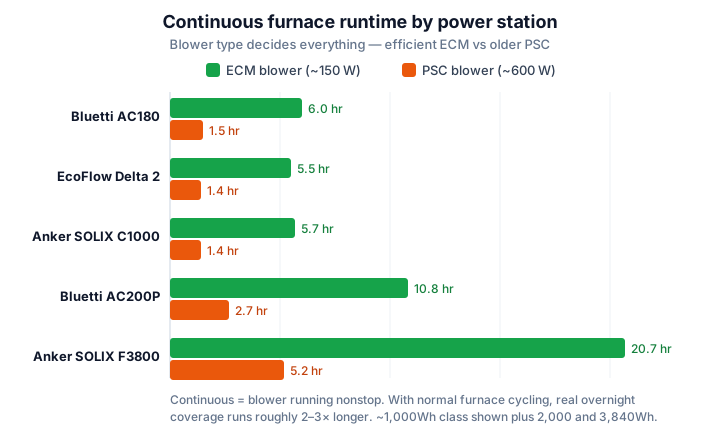
Estimated continuous blower runtime, using the derating above. Real overnight coverage is longer because of cycling (next section).
| Power station | Usable Wh | ECM blower @ 150W | PSC blower @ 600W |
|---|---|---|---|
| Bluetti AC180 (1,152Wh) | ~930 | ~6 hr | ~1.5 hr |
| EcoFlow Delta 2 (1,024Wh) | ~827 | ~5.5 hr | ~1.4 hr |
| Anker SOLIX C1000 (1,056Wh) | ~853 | ~5.7 hr | ~1.4 hr |
| Bluetti AC200P (2,000Wh) | ~1,615 | ~10.8 hr | ~2.7 hr |
| Anker SOLIX F3800 (3,840Wh) | ~3,100 | ~20.7 hr | ~5.2 hr |
Duty cycle: why the real numbers are 2–3× better
A furnace cycles — it runs to bring the house up to the thermostat setpoint, then shuts off. In genuinely cold weather a well-insulated home’s furnace might run 15–25 minutes per hour; in milder conditions, much less. That means the continuous numbers above understate real overnight coverage by roughly 2–3×.
So a 1,000Wh station with a modern ECM blower (≈5.4 hr continuous) realistically carries the furnace through a night when it’s only firing a third of the time. The same station with an older PSC blower is the tight case — you’ll want 2,000Wh+ for a full night.
A furnace is rarely the only thing you need running. Our runtime test dataset covering 5 brands lists the same derated figures for fridges, freezers, CPAP machines and pellet stoves, which is the fastest way to check whether one station covers your whole load list.
The pure-sine-wave requirement (don’t skip this)
A furnace’s blower motor and — especially — its ECM control board need a clean pure sine wave. A cheap modified-sine inverter can run hot, cause erratic behavior, or damage the ECM electronics. Every power station recommended here is pure sine wave; never run a furnace from a modified-sine unit.
Picks by scenario
Confirm your furnace is gas (not electric) and check whether its blower is ECM or PSC — it’s on the furnace’s rating label or in its manual.
Modern gas furnace (ECM blower), overnight → Bluetti AC180 / EcoFlow Delta 2 / Anker SOLIX C1000
A modern ECM furnace pulls only ~60–200W running, so a ~1,000Wh pure sine station covers a full night with cycling and still has headroom for phones and a few lights. The AC180 (1,800W / 2,700W surge) is the affordable pick; the Delta 2 and C1000 add capacity and surge margin.
Older gas furnace (PSC blower, high surge) → Bluetti AC200P
An older PSC blower runs at 500–900W and can spike to 1,800W+ on startup. The AC200P’s 4,800W surge rating (per Bluetti’s spec sheet) swallows that ignition spike, and its 2,000Wh battery gives a meaningful night of cycled heat.
Furnace + fridge + lights, multi-day → Anker SOLIX F3800 + solar
At 3,840Wh and expandable, the F3800 runs even an older PSC furnace alongside a fridge and lights, and pairs with solar to recharge between cold nights. This is the configuration for riding out a multi-day winter outage — but keep a non-electric backup heat source as well.
Electric furnace → you can’t; plan for a space heater instead
If your heat is an electric furnace (10,000–50,000W, 240V), no portable power station will run it. The realistic battery-backup plan is to power a single space heater (≈750–1,500W) in one room rather than the whole-home furnace — size the station for the heater’s continuous draw and surge instead.
A note on the brands
The pure-sine stations here — Bluetti, EcoFlow, Anker SOLIX — are engineered in and around Shenzhen and publish detailed continuous and surge output specs (sometimes in more depth in their Chinese-language documentation than the English pages). For a furnace, the spec that matters is the surge/peak watts versus your furnace’s 1,800–3,000W ignition spike — read that number, not the headline continuous rating, before buying.